When buying industrial air filters, many procurement professionals can only rely on the basic information on the label or just the look of the outer frame to judge quality. But let’s be honest—that doesn’t tell the whole story.
As a supplier with over 20 years of manufacturing experience, we know that the difference between a great filter and bad one is often in the details you can't immediately see.
To help you shop like a pro (even if you have zero technical experience), we have summarized 7 hidden indicators that determine the true quality of an industrial air filter.
Not all filter media r is created with same quality. A high-quality filter is designed to do two things perfectly: capture dust and let air flow through easily.When we choose the air filters, look for media that appears dense and uniform.The cheap, loosely woven media will allow particulates to pass right through.
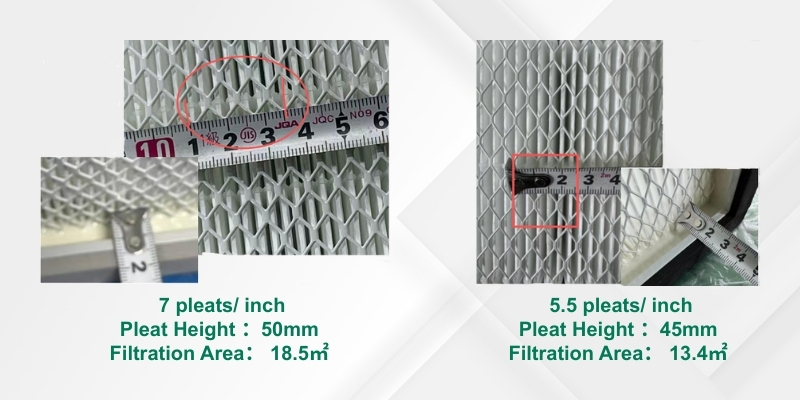
Think of the filter paper like an accordion. The more "folds" (pleats) you have, the more filter area there is. And more filter area means less resistance , lower energy bills, and a longer service life.
If you aren't sure, grab a tape measure. Count how many pleats are in 1 inch (25.4mm).The industry standard is typically 7 pleats per inch. If it’s significantly less, the supplier might be cutting corners to save costs.
Just like the number of pleats, the height (or depth) of the pleats matters. Look at the actual thickness of the filter media pack, not just the metal frame. A thicker media pack means more filtration area and a longer lifespan.
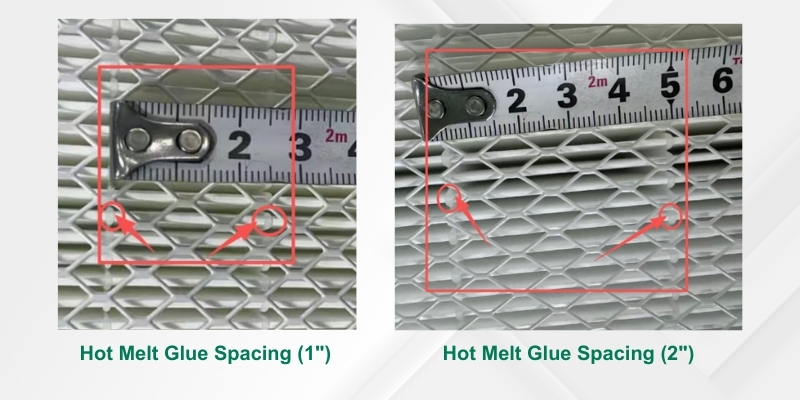
In "mini-pleat" filters, lines of hot melt glue are used to hold the paper in place. A shorter glue gap usually means a denser support. The wider glue gap will results in insufficient support, making the filter pleats prone to deformation during long-distance transportation and affecting airflow.
By the way, if the glue lines are too thick, they block the airflow, forcing your fans to work harder.
To assemble a filter, we pour a sealant (often called AB glue or Polyurethane) between the filter pack and the frame. This makes it airtight. If the glue is too thin, or if the manufacturer uses "spot gluing" instead of a continuous pour, the filter will leak.
A poor seal means the filter can not pass the regular test according to the standards like EN1822.
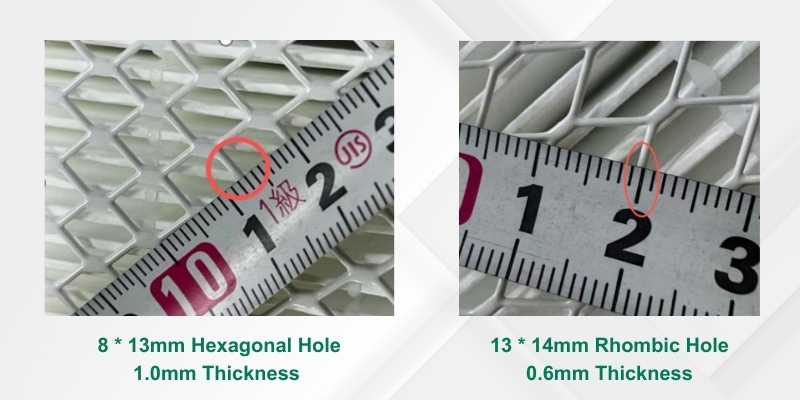
The fiberglass paper is actually very fragile. Without protection, it breaks easily. A metal faceguard protects the paper during shipping and installation.
At the same time,the thickness of this grid adds to the overall strength of the filter. A durable grid ensures the filter won’t warp or twist over time.
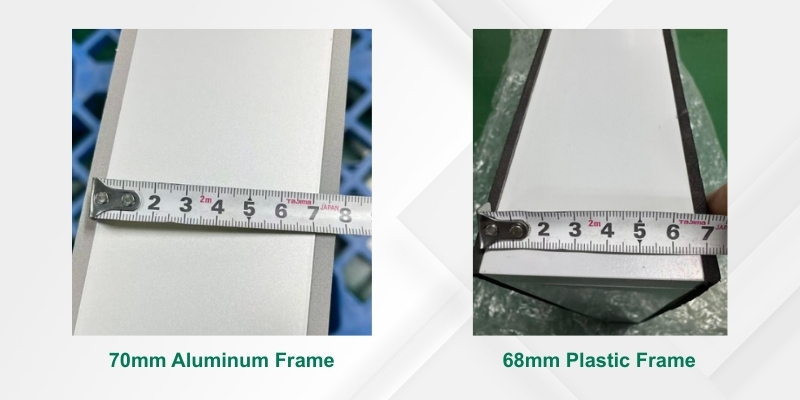
The frame is the skeleton of the filter. Metal (Aluminum/Galvanized) frame can resist crushing, handle pressure well, ensure a tight seal, and are fully recyclable.
Plastic is usually cheaper, but can warp or bend under heat and pressure, risking air leaks. They are also harder to recycle.
The industrial air filter might seem like a small accessory in your ventilation system, but it protects the entire operation.Buying a low-quality filter might save you a few dollars today, but it will cost you thousands in the long run. Why? because energy consumption. When a cheap filter creates high resistance, your system’s fans have to run at full power to push air through. This wastes electricity and wears out your core equipment faster.
As a manufacturer of air filters, Amorair operates on a simple philosophy: Integrity, Innovation, and Putting Customers First. We don't just build filters; we engineer solutions that save energy and protect your environment. We are constantly researching new technologies to ensure you get high-quality, high-efficiency products.
We look forward to working with you to create a cleaner, greener, and better tomorrow!
Learn how a three-stage chemical filtration syst
Amorair provides semiconductor air filtration so
Eliminate "jet effects" and airflow dead zones i
Contact: +1(213)786-4191
Phone: +1(213)786-4191
Tel: +1(213)786-4191
Email: Info@amorairglobal.com
Add: 1476 W 9th St Upland, CA, United States 91786
 English


